

- Call us
813-751-6429

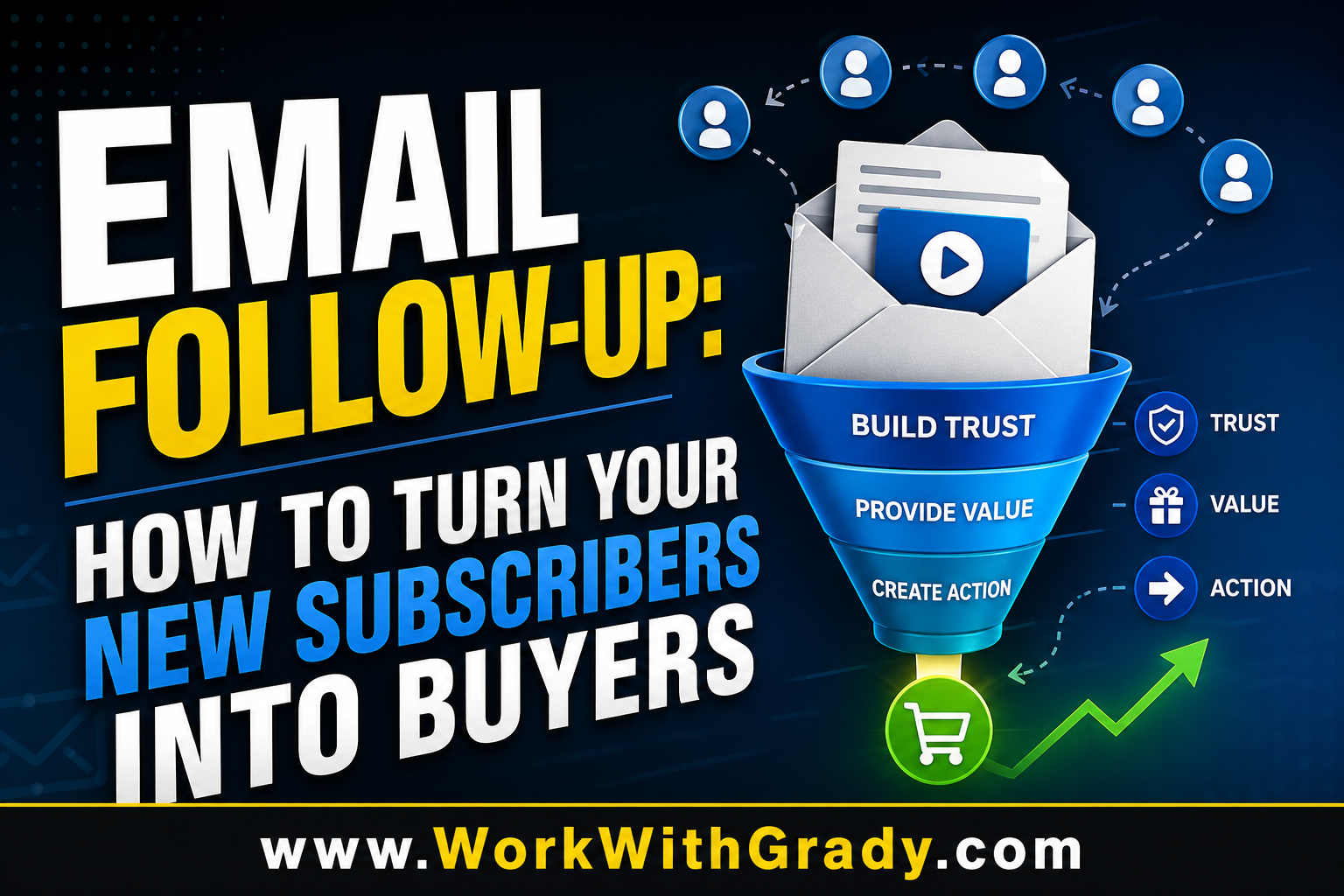
If your email follow-up is inconsistent, random, or only shows up when you feel like promoting something, your list will never convert predictably, no matter how many leads you generate. Most people blame their offer or their traffic, but the real leak happens after the opt-in. The difference between a list that makes money and a list that feels like a dead end is simple: trust-building follow-up that guides people from interest to action.
In this article, you’ll learn what it actually is, why most lists don’t convert, how to write follow-up that builds trust instead of pressure, and how to create a simple rhythm that turns subscribers into buyers behind the scenes.
Most email lists don’t convert for a simple reason: the relationship gets interrupted. A lot of people build a list the same way they build a gym membership. They’re excited at first, they set it up, they capture some leads… and then nothing happens. The emails stop. The value disappears. Or worse, the only time the subscriber hears from them is when there’s something to sell.
From the subscriber’s perspective, that feels like, “You wanted my email… then you vanished… and now you’re asking me to buy.” That creates resistance immediately, not because the offer is bad, but because trust was never built. The lead didn’t go cold because they weren’t interested. They went cold because there was no consistent signal that you understood them, could help them, and were worth paying attention to.
That’s why your email follow-up matters. Most people don’t buy because they saw your link once. They buy after they trust you, and trust is created through consistent value and clarity over time. email follow-up is the mechanism that keeps the conversation alive long enough for trust to form.
But this isn’t about “checking in,” and it isn’t blasting promotions. It’s a guided relationship that keeps you relevant so the lead doesn’t cool off, makes the problem clearer so the person feels understood, and makes the next step obvious so action feels natural. In other words, follow-up is what turns “interest” into “intent.”
When this is done right, your list stops acting like a folder of email addresses and starts acting like a pipeline. Subscribers don’t just consume. They reply. They ask questions. They book calls. They buy. Not because you pressured them, but because your emails helped them make a decision.
That’s the difference between a list that “looks good” and a list that produces income. The money isn’t in the opt-in. The money is in what happens after it.
Most business owners assume every lead is deciding between “buy” and “don’t buy.”
That’s not what’s happening.
Most leads are stuck in a completely different decision loop. They’re deciding between:
“I trust this person enough to take a step,” and “I’m not sure yet… I’ll wait.”
That gap, right there, is the trust gap. And if you don’t close it, people don’t reject you… they delay you. They stay subscribed, they keep watching, they keep “meaning to,” and they keep waiting for a moment that feels safer. Then weeks pass, they cool off, and you’re left thinking your offer didn’t work when the reality is simpler: they never got enough clarity and confidence to move.
Here’s what creates that hesitation:
They’re not sure you understand their problem deeply enough.
They’re not sure your solution fits their situation.
They’re not sure what happens after they say yes.
They’re not sure if they’ll regret the decision.
So they stall. Not because they don’t want the result, but because uncertainty feels risky.
That’s why your email follow-up sequence is so powerful. It closes the trust gap by creating a consistent decision path: you teach in a way that makes them feel understood, you guide them toward a simple “better way” that feels doable, and then you invite them to take one clear next step without pressure.
Teach, guide, invite.
When you do that consistently, the lead stops feeling like they’re guessing. They start feeling like they’re being led. And when people feel led with clarity, they move.
You don’t need a 30-email labyrinth or some complicated automation map to get conversions. You need a simple follow-up path that moves a subscriber through the real decision they’re making: “Do I trust you enough to take the next step?”
And one of the fastest ways to build that trust is to include short videos of yourself inside your emails.
Here’s why: most inboxes are full of faceless marketing. A video instantly separates you from that noise because it adds tone, presence, confidence, and leadership. When people can see you and hear you, even for 30–60 seconds, you stop being “another email” and start being a real person they recognize. That positions you as the expert, lowers skepticism, and increases conversions because trust forms faster.
Now, the sequence itself should be simple. Each message has a job, and when you pair that job with a quick video, it accelerates the relationship.
Start with a welcome email that confirms what they opted in for and sets expectations. This is where a short “hey, here’s what to expect” video works extremely well because it immediately humanizes you. You’re not performing. You’re establishing leadership and letting them feel your certainty.
Next, send an email that clarifies the real problem they’re dealing with, not the generic version, but the underlying cause. This is where people think, “That’s exactly what’s happening to me.” A video here can be powerful because you can explain it in plain language and make it feel personal instead of preachy.
After that, address the common mistake that keeps them stuck. This isn’t about shaming anyone. It’s about giving them a new lens that creates urgency without hype. A video helps because you can deliver the truth with confidence and empathy at the same time, which makes it land.
Then you present the better way, the simple path forward. This is where your positioning gets strong. They don’t need your life story; they need a believable approach that feels doable. A video here increases conversions because it feels like guidance, not marketing.
Once you’ve shown the path, you reinforce credibility without bragging. A short story, a simple before-and-after, or what changed when you fixed this issue in your own business. Video works well here because it builds trust through authenticity. People don’t need “more claims.” They need to feel that you’re real.
Finally, you invite them to take one clear next step. Not vague. Not “let me know.” One action, one direction. This is where a video can dramatically increase response because it makes the invitation feel like a conversation instead of a pitch. You’re not trying to convince, you’re guiding them to act.
That’s the core idea: Your email follow-up sequence converts when it builds trust in sequence, and video speeds up trust because it lets people experience you as a leader, not just read you as text.
The biggest mistake people make with their email follow-up sequence is thinking the goal is to write “better emails.” So they obsess over subject lines, templates, and wording, then wonder why subscribers still don’t buy. But conversions don’t come from prettier sentences. They come from a decision path.
Your follow-up exists to move someone from “interesting” to “I’m ready.” If your emails are entertaining but don’t lead anywhere, you’re training your list to consume instead of act. You’re teaching them that your inbox is a place for information, not transformation. They’ll read, nod, and keep scrolling through life exactly the same, because nothing in your follow-up required a decision.
The other version of this mistake is when people “teach” endlessly but never invite. They become the free coach in someone’s inbox. The list respects them, even likes them, but doesn’t take the next step because the next step is never clearly presented. And when you finally do offer something, it feels sudden and disconnected because you never built the bridge.
That’s why the real goal is simple: every email should do one of three things. It should increase clarity about the problem, increase trust in you as the guide, or create a clear next step that feels logical. When your follow-up consistently does that, selling doesn’t feel salesy, it feels like the natural continuation of the conversation you’ve been leading the whole time.
Your email follow-up sequence is the behind-the-scenes machine that turns leads into buyers. It’s what turns a list into an asset instead of a folder of email addresses that never produces anything. When you use follow-up correctly, you stop relying on luck, algorithms, or random posts to create income. You build trust on purpose, you guide people on purpose, and you invite action on purpose, so sales become a predictable outcome, not a surprise.
This is also why I recommend using a real email platform instead of trying to “wing it” manually or rely on social media DMs. If your follow-up depends on memory, mood, or motivation, it will break. A system doesn’t break when you get busy. A system keeps running.
That’s why I use and recommend AWeber. It gives you the ability to capture leads cleanly, organize them properly, and automate a simple follow-up sequence so every new subscriber gets the relationship-building path they need, without you having to reinvent it every time. You can write one strong welcome email, one strong clarity email, one strong “better way” email, and one clear invitation… and AWeber will deliver it consistently, the same way every time, to every new lead that comes in. That’s how follow-up becomes leverage.
And if you want help setting up a simple Email Follow-up system that fits your offer and your strengths, I’m offering a FREE 20-minute private coaching session (normally $333). In that session, we’ll map your first follow-up sequence, tighten your message so your emails pull qualified replies, and build a rhythm that converts without you needing to be loud, pushy, or constantly “on.”

Because the money isn’t just in the list.
It’s in the follow-up.
#EmailFollowUp, #EmailMarketing, #LeadGeneration, #SalesFunnels, #ConversionRate, #QualifiedLeads, #MarketingSystems, #Copywriting, #OnlineBusiness, #Entrepreneurship, #FollowUpSequence, #CustomerJourney, #BusinessGrowth, #DigitalMarketing, #WorkWithGrady
Stay ahead in a rapidly world. Subscribe to Prysm Insights,our monthly look at the critical issues facing global business.

