

- Call us
813-751-6429

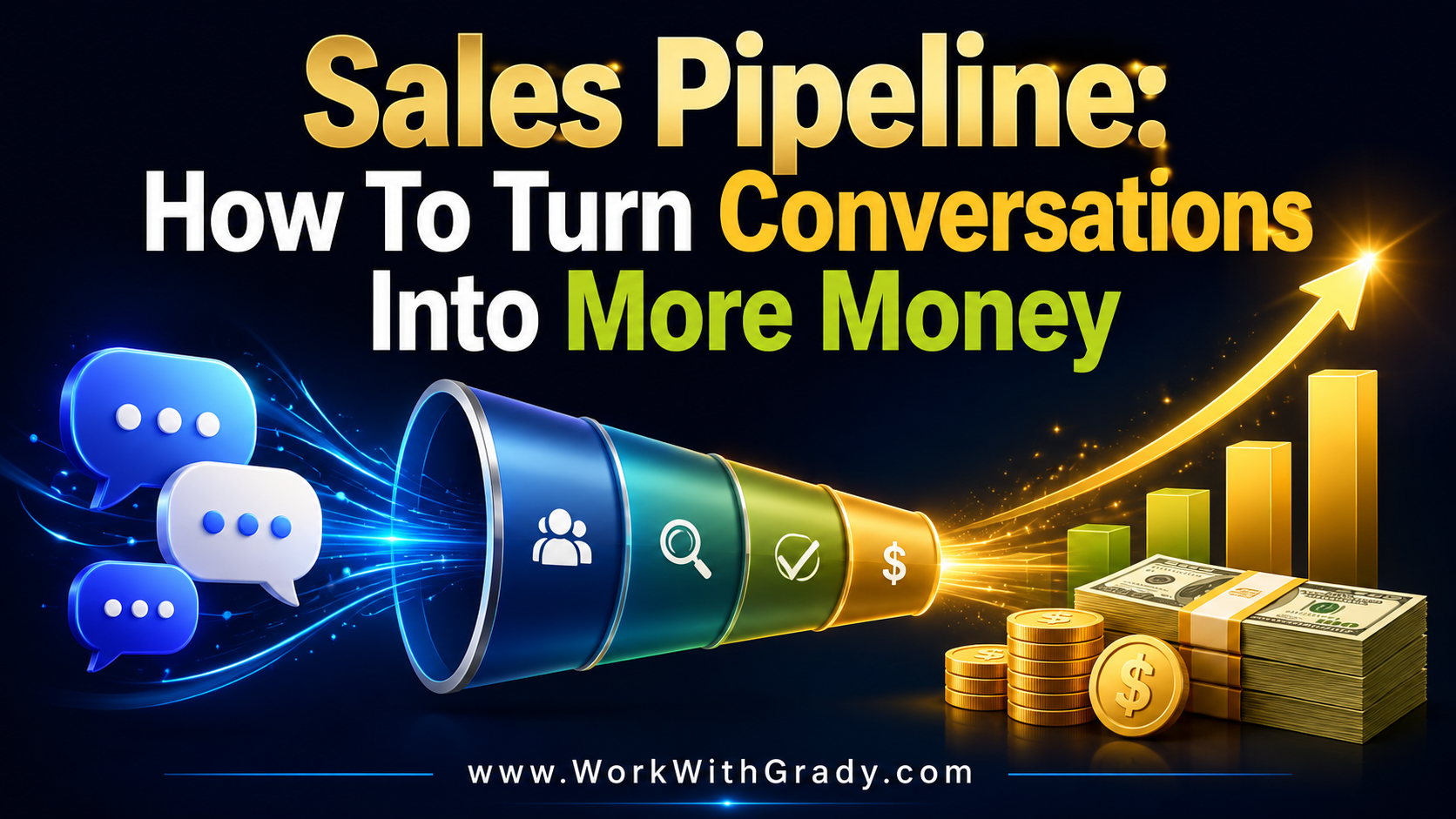
A sales pipeline is one of the most important pieces of any business, yet it is also one of the most ignored. People post content, have conversations, send messages, collect leads, book calls, and then wonder why income still feels random. The problem usually isn’t that they don’t have enough activity. The problem is that the activity has no structure. A sales pipeline gives every conversation a place to go, every prospect a next step, and every opportunity a process that can be tracked, followed up on, and improved.
If your income feels inconsistent, it may not be because your offer is bad. It may not be because people are not interested. It may simply be because you are treating every conversation like a separate event instead of part of a bigger system.
Predictable income does not come from random conversations.
Predictable income comes from a predictable process.
A sales pipeline is the path someone moves through from first awareness to becoming a customer. It is the structure that helps you know where every person stands, what they need next, and how close they are to making a decision.
Without a sales pipeline, everything feels scattered. You talk to someone today, send information tomorrow, forget to follow up next week, and then wonder why they disappeared. You may have people who are interested, but they are sitting in different places mentally. One person is just learning about you. Another is comparing options. Another has a question. Another is ready to buy but needs a clear next step.
If you treat all of them the same, you lose sales.
A sales pipeline helps you stop guessing. It allows you to see the difference between attention, interest, intent, and decision. That matters because every stage requires different communication. Someone who just discovered you does not need the same message as someone who already asked about pricing. Someone who downloaded a free guide does not need the same follow-up as someone who booked a call.
The pipeline gives you clarity.
And when you have clarity, you can lead people better.
A lot of entrepreneurs confuse activity with progress.
They are posting. They are messaging. They are networking. They are answering questions. They are having calls. They are “staying busy.” But busy does not always mean productive. If those conversations are not moving through a clear process, they can create the illusion of momentum while the business stays inconsistent.
Random conversations create random income because there is no reliable next step.
Someone comments on your post, but nothing happens after that. Someone asks for information, but there is no follow-up rhythm. Someone says they are interested, but there is no system to move them toward a decision. Someone books a call, but after the call they disappear because the conversation was never placed into a follow-up process.
That is how money gets left on the table.
It is not always that people said no. Sometimes they were simply never led.
People are busy. They get distracted. They hesitate. They forget. They overthink. They need more trust, more clarity, and more guidance before they take action. If you do not have a sales pipeline, you are depending on them to remember, return, and decide on their own.
That is not a strategy.
That is hope.
One reason people struggle with their sales pipeline is because they treat every person the same.
But not everyone who shows interest is in the same place.
A lead is someone who has shown some level of attention. Maybe they downloaded something, clicked a link, commented on a post, subscribed to your list, or reached out with a basic question. They are aware, but they may not be ready.
A prospect is someone who has a real problem or desire that connects to what you offer. They are not just casually looking. They have a reason to pay attention. They may be considering options, asking questions, or trying to decide if your solution fits.
A buyer is someone who has crossed the line from interest into action. They trusted you enough to make a decision.
The job of your sales pipeline is to move the right people from lead to prospect to buyer without forcing the process.
This is where a lot of people get it wrong. They either pitch too soon or wait too long. They try to sell to cold leads who are not ready, then get discouraged when they do not buy. Or they keep giving value to serious prospects but never invite them to take the next step.
Both mistakes cost money.
The pipeline helps you know what should happen next.
The fastest way to lose sales is to end conversations with no clear next step.
A person asks a question. You answer it. Then the conversation dies.
A person says they are interested. You send information. Then nothing happens.
A person says they need to think about it. You say, “Okay, let me know.” Then they disappear.
This is not because they are always uninterested. It is because the conversation did not have direction.
Every serious conversation needs a next step. That next step does not always have to be a sale. Sometimes the next step is sending a resource. Sometimes it is asking a clarifying question. Sometimes it is booking a call. Sometimes it is following up the next day. Sometimes it is inviting them to watch a video, read an article, join your email list, or review an offer.
But there should always be movement.
A sales pipeline turns conversation into movement.
Instead of leaving the prospect floating, you guide them. You help them understand where they are, what they need, and what happens next. That is leadership. And in business, leadership closes far more sales than pressure ever will.
Follow-up is not separate from your sales pipeline. Follow-up is what keeps the pipeline alive.
Without follow-up, leads go cold. Prospects drift. Buyers hesitate. Opportunities disappear. You may have created interest, but interest fades quickly when there is no continued communication.
This is why follow-up matters so much. It keeps clarity in front of the person. It reminds them why they were interested. It answers questions. It reduces uncertainty. It helps them process the decision.
Most people do not buy the first time they hear about something. They need repetition. They need trust. They need to see that you are consistent. They need to feel that you understand their situation and can guide them to a better outcome.
That does not happen with one message.
It happens through intentional follow-up.
The best follow-up is not needy. It is not desperate. It is not “just checking in.” It is useful, relevant, and connected to what the person already told you they wanted.
When follow-up is done right, it makes the sales pipeline feel natural. People do not feel chased. They feel guided.
Email marketing is one of the most powerful tools you can use inside your sales pipeline because it gives you a way to stay connected without manually chasing every person.
When someone joins your email list, they enter a relationship channel you control. That means you can keep building trust after the first interaction. You can teach. You can share stories. You can answer objections. You can reframe their problem. You can invite them to take the next step when the timing makes sense.
This is how conversations become predictable income.
Social media may create awareness, but email marketing helps turn that awareness into trust. And trust is what moves people through the pipeline.
If you are relying only on social media, you are hoping the algorithm shows your content to the right person at the right time. But with email, you can intentionally guide your list through a sequence. You can welcome them. You can help them understand the problem. You can show them what to fix. You can explain your offer. You can invite them to reply, book, join, or buy.
That is why email marketing and your sales pipeline should work together.
Social media starts the conversation.
Email marketing continues it.
Follow-up closes the gap.
Your sales pipeline does not need to be complicated. In fact, complicated systems often break because people do not actually use them.
A simple pipeline is better than a fancy pipeline you ignore.
At the most basic level, you need a way to attract attention, capture interest, build trust, create a conversation, make an offer, follow up, and close. That is the flow.
First, people need to discover you. This can happen through content, referrals, networking, ads, videos, podcasts, articles, social media, or conversations.
Then, they need a reason to raise their hand. This could be a lead magnet, a free guide, a webinar, a call invitation, a direct message, or a simple question that creates engagement.
After that, you need a trust-building process. This is where email marketing, follow-up messages, content, stories, testimonials, examples, and education become important.
Then, the person needs a clear next step. That might be booking a call, replying to an email, watching a presentation, joining your program, buying a product, or starting a trial.
Finally, you need a follow-up process for anyone who does not buy immediately.
That is the part most people miss.
They focus on getting attention but do not build the system that turns attention into revenue. A sales pipeline fixes that because it gives every interested person somewhere to go next.
Warm prospects are some of the most valuable people in your business because they already know something about you. They are not completely cold. They have shown interest. They have engaged. They have asked questions. They may even believe what you offer could help them.
But warm prospects can go cold fast when there is no follow-up.
This is where many people lose money without realizing it. They keep trying to find new leads while ignoring the people who already raised their hand. They chase new attention while old opportunities sit untouched. They assume silence means no, when sometimes silence simply means uncertainty.
To stop losing warm prospects, you need to track them.
You need to know who asked for information, who booked a call, who said they needed time, who had a money objection, who wanted to talk to a spouse, who showed interest but did not respond, and who may be ready later.
That does not mean you need a complicated CRM on day one. It means you need some way to organize conversations so nobody falls through the cracks.
A simple spreadsheet, notes system, calendar reminder, CRM, or email automation can make a huge difference. The tool matters less than the discipline of using it.
Warm prospects should not be forgotten.
They should be followed up with intentionally.
A strong sales pipeline requires a mindset shift.
You are not trying to pressure people.
You are trying to guide people.
That difference matters.
When you see sales as pressure, follow-up feels awkward. Offers feel uncomfortable. Conversations feel tense. You start avoiding the very activities that create income.
But when you see sales as leadership, everything changes. You understand that people need help making decisions. You understand that uncertainty is normal. You understand that your job is not to force anyone, but to create enough clarity for the right person to take the right step.
Some people will buy now. Some people will buy later. Some people will never buy. The pipeline helps you identify where people are without turning every conversation into an emotional roller coaster.
That is how you build predictable income.
Not by chasing everyone.
Not by hoping every conversation closes immediately.
But by creating a system that keeps the right conversations moving.
A sales pipeline is not just a business tool. It is a discipline.
It forces you to stop winging it. It helps you stop losing track of people. It gives structure to your conversations. It turns follow-up into a process instead of a panic move. It helps you see what is working, where people are getting stuck, and what needs to improve.
If your income feels random, look at your pipeline.
Are people discovering you consistently?
Are they raising their hand?
Are you capturing their information?
Are you building trust after the first interaction?
Are you giving them a clear next step?
Are you following up when they do not buy right away?
Those questions matter because predictable income does not happen by accident. It comes from building a system that supports the sale before, during, and after the conversation.
And if you want help building a simple sales pipeline that fits your business, your offer, and your personality, I’m offering a FREE 20-minute private coaching session (normally $333). In that session, we’ll map out where your conversations are coming from, where they are getting stuck, and what needs to happen next so you can turn more conversations into predictable income.

#SalesPipeline, #SalesStrategy, #BusinessGrowth, #LeadGeneration, #FollowUp, #SalesFollowUp, #ClosingSales, #EmailMarketing, #SalesFunnels, #EntrepreneurMindset, #OnlineBusiness, #MakeMoneyOnline, #AffiliateMarketing, #NetworkMarketing, #WorkWithGrady
Stay ahead in a rapidly world. Subscribe to Prysm Insights,our monthly look at the critical issues facing global business.

