

- Call us
813-751-6429

In 2026, the United States of America turns 250 years old. That milestone should be more than fireworks, flags, parades, and political speeches. It should be a national moment of reflection. Because if America is going to celebrate freedom, we need to understand what freedom actually is.
Freedom is not the ability to do whatever you want with no responsibility.
Freedom is not government giving you permission to live.
Freedom is not comfort, convenience, or endless personal preference.
Real freedom is the God-given right to live with conscience, speak truth, build a life, own property, worship freely, defend your rights, pursue your calling, and govern yourself with enough virtue that you do not need constant control from above.
That is the deeper story of America.
America was not born out of a desire to be chaotic. It was born out of the belief that rights come from God, not kings. It was built on the idea that government exists to protect those rights, not create them. And it was designed around a hard truth about human nature: power must be limited because people are flawed.
That idea did not start in 1776. It has roots that go back centuries.
Long before the Declaration of Independence, long before the Constitution, and long before the United States existed, there was a major idea taking shape in England: even the king was not above the law.
In 1215, the Magna Carta forced King John to recognize limits on royal power. It was not a modern democratic document in the way Americans think about freedom today. It did not give equal rights to everyone. It came out of a conflict between the king and his barons. But its legacy became much bigger than the moment that produced it.
The Magna Carta planted a seed.
It said there must be law above raw power. It pushed forward the idea that government cannot simply seize, imprison, punish, or destroy people by command alone. That matters because tyranny always begins when power no longer has to answer to law.
This is where the American understanding of freedom begins to take shape.
Freedom requires law.
Not law as a weapon. Not law as control. But law as a shield against arbitrary power. Without the rule of law, rights become opinions. Justice becomes politics. And liberty becomes whatever those in power say it is.
America inherited that tradition and then took it further.
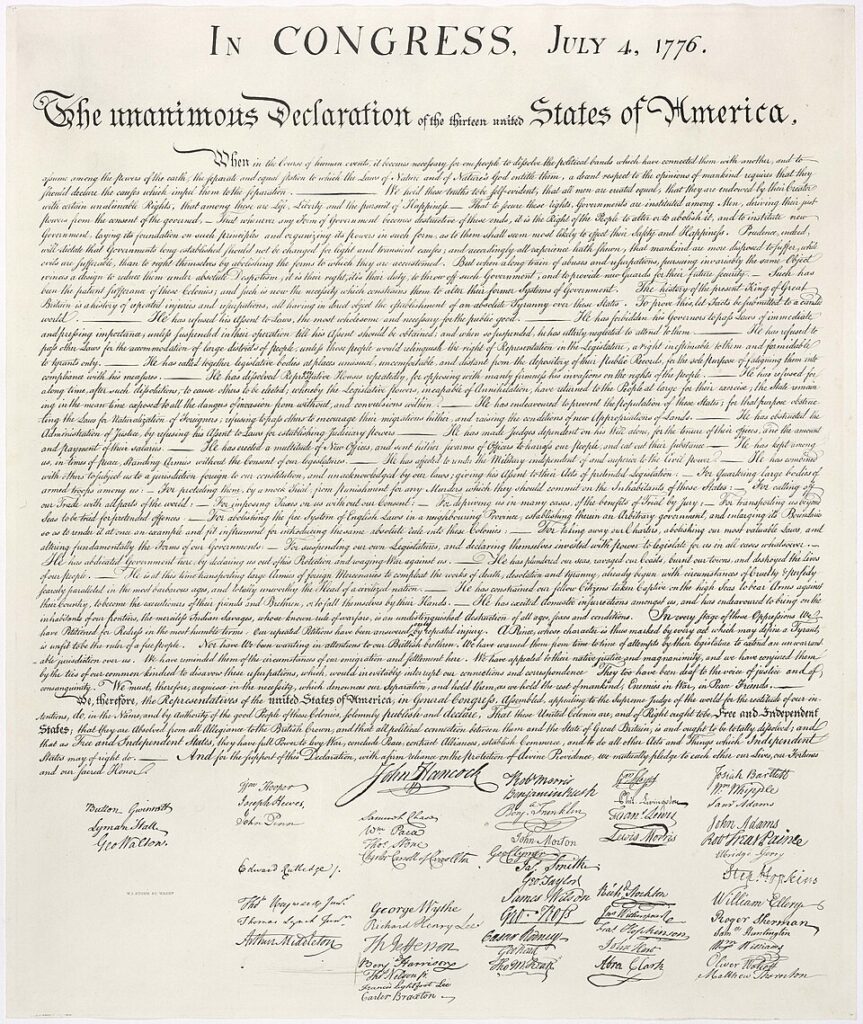
The Declaration of Independence was not just a breakup letter to King George III. It was a spiritual, moral, and political statement about the nature of human rights. It was also an act of extraordinary courage.
When the Founders signed the Declaration, they were not making a safe political statement from behind a screen. They were not posting an opinion and waiting to see how many people agreed. They were putting their names, reputations, fortunes, families, and lives on the line.
If the American Revolution failed, those signatures could have become evidence of treason.
In other words, these men were not just signing a document. They were risking a death warrant.
That is what makes the Declaration so powerful. It was not written by people looking for comfort. It was not signed by men who wanted convenience. It was not the product of people trying to protect their social status, avoid criticism, or stay acceptable to the powerful. They knew the cost could be everything.
And they signed anyway.
That raises a serious question for America today:
Would people now be willing to do that for what they believe in?
Would people risk comfort, reputation, income, status, safety, and even life itself to defend freedom? Or have we become so comfortable with inherited liberty that we no longer understand what it costs to create or preserve it?
The Founders wrote that all men are created equal and “endowed by their Creator” with unalienable rights.
That phrase matters.
They did not say rights come from the government. They did not say rights come from the king. They did not say rights come from popular opinion, public approval, or majority vote. They said rights come from the Creator.
That is the foundation of American freedom.
If rights come from government, government can take them away. If rights come from culture, culture can redefine them. If rights come from the majority, the majority can vote them out of existence. But if rights come from God, then government’s role is not to grant them. Government’s role is to secure them.
That one idea changes everything.
It means the individual is not property of the state. It means conscience does not belong to a king. It means speech is not a privilege handed down by rulers. It means your life, liberty, and pursuit of happiness are not favors from politicians. They are rights that existed before government and stand above government.
That is why the Declaration says governments derive their just powers from “the consent of the governed.”
This was revolutionary.
It flipped the old order upside down. The people were not property of the state. The state was accountable to the people. The king was not sovereign over conscience. The people had rights before government ever entered the picture.
That is freedom.
But freedom was not theoretical to the men who signed the Declaration. It was not a slogan. It was not branding. It was not a holiday weekend. It was a line in the sand.
They were saying that there are moments when obedience to tyranny becomes betrayal of truth. There are moments when comfort must bow to conviction. There are moments when people must decide whether they believe their rights are real enough to defend when defending them becomes dangerous.
That is the part modern America needs to remember.
Freedom is easy to talk about when it costs nothing.
It becomes real when there is a price attached.
The Founders had disagreements. They were imperfect men. America itself has had to struggle, repent, correct, and grow toward the very principles written in its founding documents. But the Declaration gave the nation a standard higher than human power. It declared that rights come from the Creator, that government exists to secure them, and that when government becomes destructive of those rights, the people have the authority to alter or abolish it.
That is not passive language.
That is not comfortable language.
That is the language of moral responsibility.
The Declaration assumes there is truth. It assumes there is a Creator. It assumes human beings have dignity. It assumes government can become destructive. And it assumes people have both the right and responsibility to resist tyranny when power violates its purpose.
That is why America’s 250th anniversary should not only make us celebrate. It should make us examine ourselves.
Do we still believe freedom comes from God, or do we now treat it like a government program?
Do we still have the courage to speak truth, or do we surrender the moment truth becomes unpopular?
Do we still understand rights as sacred, or have we reduced them to political talking points?
Do we still have the backbone to defend liberty, or have we become a people who want freedom only when it is convenient?
The Declaration of Independence forces every generation to answer those questions.
Because freedom is not passive.
Freedom must be understood.
Freedom must be defended.
Freedom must be lived.
And sometimes, freedom must be signed for with everything on the line.
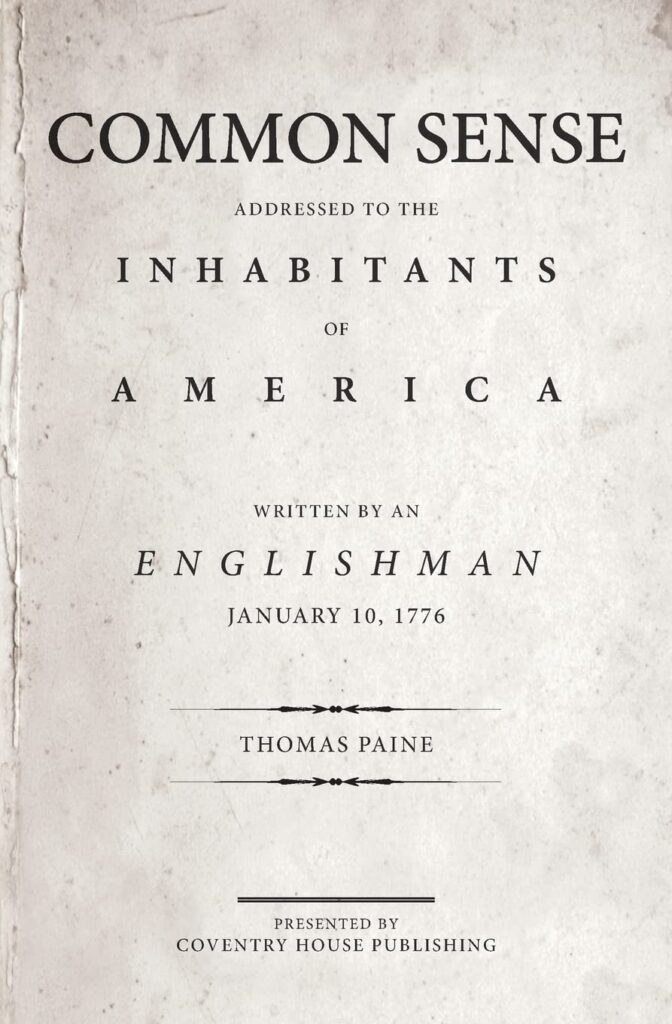
In 1776, Thomas Paine published Common Sense, and the pamphlet helped move ordinary colonists toward independence. Paine had a gift for taking big political ideas and putting them into language regular people could understand.
One of his most powerful ideas was that in free countries, “the law ought to be King.”
That sentence captures the break from monarchy.
Under monarchy, the king is law. Under liberty, the law is king. That means no ruler, politician, judge, agency, party, or mob should stand above the law. The law must restrain power, protect rights, and apply fairly.
Paine also understood the difference between society and government. Society is what people build together. Government exists because human nature needs restraint. That distinction still matters.
A free people should not look to government as the source of every solution, every identity, every moral direction, and every responsibility. When government becomes the center of everything, people become smaller. Communities become weaker. Families become less important. Personal responsibility fades. And freedom slowly turns into dependency.
America was built on a different idea.
The people were supposed to be strong.
Families, churches, communities, businesses, local associations, and self-governing citizens were supposed to form the moral backbone of the nation. Government had a role, but it was not meant to replace the soul of the people.
The Declaration gave America its moral argument. The Constitution gave America its governing structure.
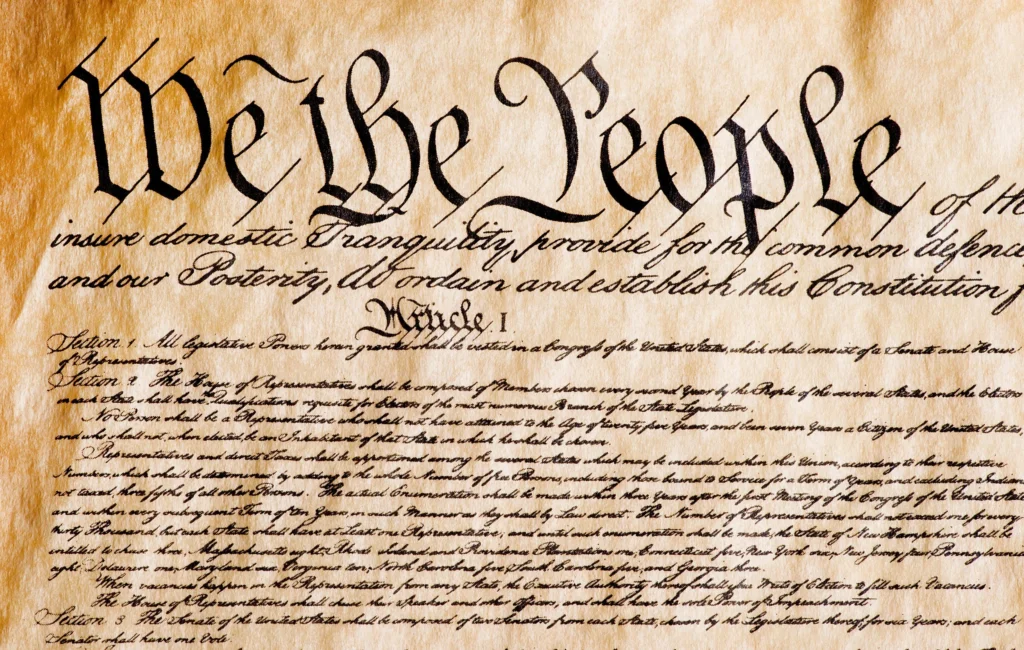
The Constitution begins with “We the People.”
That matters because it tells us where earthly political authority begins in the American system. Not with a king. Not with a ruling class. Not with a permanent bureaucracy. The government exists because the people ordained and established it.
But the Founders were not naive. They knew passion, ambition, greed, corruption, and pride could destroy any nation. They understood that freedom without structure could collapse into chaos, and power without limits could turn into tyranny.
That is why the Constitution created separated powers, checks and balances, federalism, elections, representation, and limits on government.
In Federalist No. 51, James Madison explained the logic with one famous line: “Ambition must be made to counteract ambition.”
That is not a cynical statement. It is a realistic one.
The Founders did not design the Constitution because they believed every leader would be virtuous forever. They designed it because they knew human nature needed guardrails. Power had to be divided. Branches had to check each other. Government had to be strong enough to govern but limited enough not to consume liberty.
This is a lesson America needs to remember at 250.
Freedom is not protected by trusting powerful people to behave.
Freedom is protected by limiting power, separating power, and holding power accountable.
The Bill of Rights was added because many Americans feared the new federal government could become too powerful. They wanted clear protections for speech, religion, press, assembly, due process, property, arms, privacy, trial by jury, and the rights of the people and states.
This is important: the Bill of Rights does not read like a list of privileges the government generously gives to citizens. It reads like a wall around the citizen.
Congress shall make no law.
The right of the people shall not be infringed.
No person shall be deprived without due process.
The powers not delegated are reserved.
That language matters because the American system assumes government must be restrained.
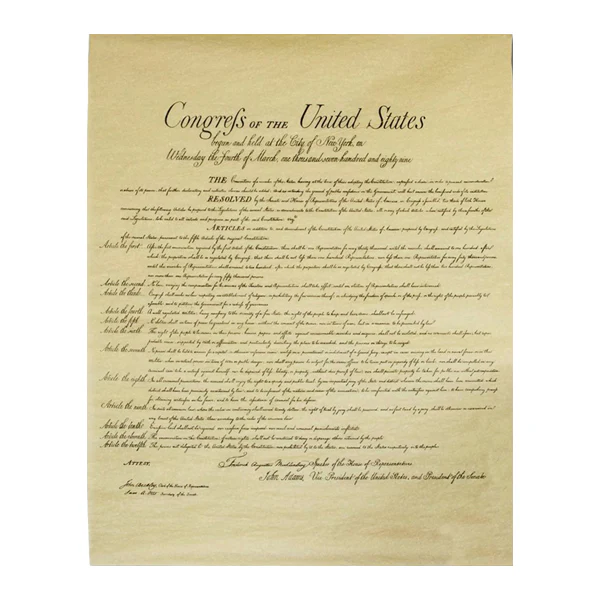
The First Amendment protects the freedom to speak, worship, publish, assemble, and petition. Those freedoms are not small things. They are the oxygen of a free society. Without them, truth is controlled. Conscience is punished. Dissent is silenced. And citizens become subjects.
The Second Amendment recognizes the right to keep and bear arms. The Fourth protects against unreasonable searches and seizures. The Fifth protects due process. The Sixth protects the accused. The Ninth reminds us that the people have rights beyond those specifically listed. The Tenth reminds us that the federal government is one of limited, delegated powers.
The Bill of Rights is not decorative.
It is a warning label against tyranny.
The Founders had different religious views, and America did not establish a national church. That matters because religious liberty was part of the American vision from the beginning. The government was not supposed to force faith, control conscience, or create a state church that stood between man and God.
But it is impossible to honestly study the founding era and miss the spiritual and moral language that shaped the American understanding of liberty.
The Founders believed freedom required virtue.
They understood that a nation could write powerful documents, form impressive institutions, and hold regular elections, but still lose liberty if the people lost the moral character necessary to live free. Paper alone cannot preserve a republic. Laws alone cannot create virtue. A Constitution can limit government, but it cannot force citizens to be honest, disciplined, courageous, responsible, and morally grounded.
That part has to come from the people.
George Washington warned that religion and morality are “indispensable supports” of political prosperity. John Adams wrote that the Constitution was made for a moral and religious people. Those statements were not throwaway lines. They reflected a serious belief that liberty and morality are connected.
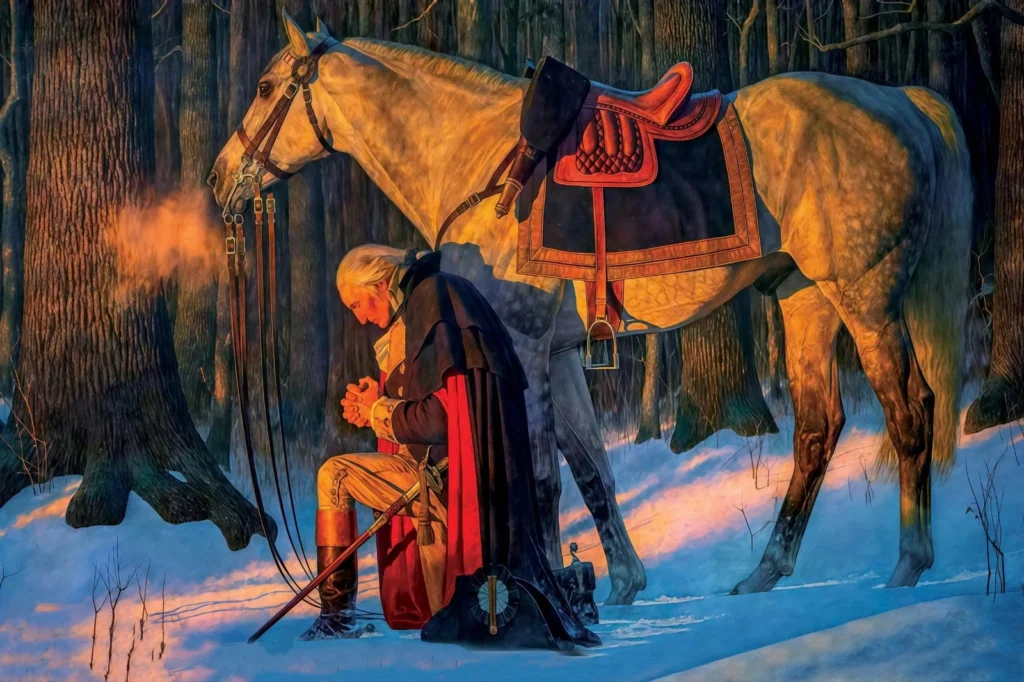
Why did they care so much about morality?
Because a free republic depends on self-government.
And self-government has two meanings.
First, it means the people govern through representatives. The people choose leaders, hold them accountable, and give consent to the system under which they live. But the deeper meaning of self-government is personal. It means individuals must govern themselves. They must control their own appetites, impulses, anger, greed, envy, dishonesty, and desire for power.
Without that inner restraint, outer restraint always grows.
When people cannot govern themselves, someone else eventually steps in to govern them. When families weaken, government expands. When personal responsibility disappears, dependency grows. When truth is no longer honored, propaganda fills the vacuum. When discipline disappears, debt, addiction, corruption, and chaos increase. When people lose the ability to disagree with dignity, society starts demanding censorship, control, and punishment instead of debate.
That is why virtue matters.
Freedom cannot survive in a people who only want rights without responsibility.
A person who wants free speech only for himself but wants silence imposed on others does not understand liberty. A person who wants the benefits of freedom without the burden of self-control does not understand liberty. A nation that wants prosperity without work, justice without truth, and rights without moral responsibility will eventually lose the very freedom it claims to love.
That is the spiritual side of liberty.
Liberty is not just political. It is moral. It is spiritual. It begins with the understanding that human beings are not property of the state. They are created by God with dignity, conscience, and responsibility. That belief gives freedom its foundation. It also places limits on government, because no earthly authority has the right to rule over the human soul.
But spiritual freedom also demands something from the individual.
It demands that people live as if their choices matter. It demands that truth matters. It demands that character matters. It demands that the home matters, the family matters, the church matters, the community matters, and the conscience matters.
A nation can have a Constitution and still lose freedom if the people lose the character required to keep it. A nation can have elections and still drift into bondage if citizens become apathetic, dependent, divided, fearful, and morally confused. A nation can sing about liberty while slowly trading it away for comfort, convenience, security, or revenge against political enemies.
That is why Benjamin Franklin’s famous warning still echoes: America had been given a republic, “if you can keep it.”
Keeping it requires more than voting.
Voting matters, but voting alone is not enough. A free people must also be informed. They must be willing to speak truth. They must resist corruption in themselves before they complain about corruption in leaders. They must raise children who understand liberty, responsibility, faith, history, and consequence. They must build strong families, strong communities, and strong moral habits.
Because when the people become weak, the state becomes strong.
That is one of the great lessons of history.
The stronger the character of the people, the less government is needed to control them. The weaker the character of the people, the more government grows to manage the disorder. This is why liberty requires virtue. Not because Americans must all think the same, worship the same, or live the same, but because freedom only works when people have enough moral discipline to respect the rights of others while taking responsibility for their own lives.
At America’s 250th anniversary, this may be one of the most important truths to recover.
Freedom is not preserved by slogans.
Freedom is preserved by people who are strong enough to live it.
It requires courage to speak truth when lies are popular. It requires faith to believe rights come from God and not from government. It requires responsibility to build instead of blame. It requires discipline to choose what is right over what is easy. It requires moral conviction to stand when culture pressures you to bow.
That is the kind of virtue liberty requires.
And without it, freedom does not disappear all at once.
It fades.
It fades through apathy. It fades through dependency. It fades through fear. It fades through moral compromise. It fades when people forget that rights and responsibilities were always meant to walk together.
America’s founders gave us a system designed for liberty.
But every generation has to supply the virtue to keep it.
One of the great dangers in modern America is confusing freedom with comfort.
Freedom does not mean life will be easy. It does not mean everyone will agree with you. It does not mean you will never be offended, challenged, criticized, or required to work. Freedom does not remove responsibility. It increases it.
A free person has to think.
A free person has to choose.
A free person has to build.
A free person has to live with consequences.
That is why freedom can feel heavy to people who have been trained to prefer safety over responsibility. Tyranny often arrives promising comfort. It offers protection from risk, protection from offense, protection from uncertainty, protection from hard decisions, and protection from personal responsibility.
But the price is always the same: control.
The American idea is different. It says you were created with rights, dignity, conscience, and purpose. It says your life does not belong to the state. It says you have the right to pursue happiness, but not the right to demand that someone else build your life for you.
Freedom is opportunity, not entitlement.
Freedom is responsibility, not escape.
Freedom is self-government, not self-indulgence.
When America turns 250, the question should not only be, “How long has the country lasted?”
The deeper question is, “Do we still understand what made it worth building?”
Because a nation can celebrate its birthday while forgetting its birthright.
America was built on the belief that rights come from God, power must be limited, government must answer to the people, law must stand above rulers, and freedom requires moral responsibility.
Those ideas are not outdated.
They are more important now than ever.
We live in a time when many people want freedom for themselves but control over others. They want speech protected when they agree with it, but punished when they don’t. They want rights without duties, benefits without sacrifice, and power without accountability.
That is not the American vision.
The American vision is ordered liberty.
It is liberty under God, liberty under law, liberty with responsibility, and liberty protected by a government limited to its proper role.
That does not mean America has always lived up to its ideals. It has not. The story of America includes contradiction, failure, injustice, and struggle. But the power of America is that its founding principles gave future generations the language and framework to correct those failures.
“All men are created equal” was not fully lived in 1776.
But once written into the American creed, it became a standard that exposed every violation of it.
That is why the American founding still matters. Not because the Founders were perfect, but because the principles were bigger than the men who wrote them.
The 250th anniversary of America should call us back to responsibility.
It is easy to celebrate freedom with flags, fireworks, songs, and speeches. Those things matter because symbols remind us of what has been passed down. But celebration without understanding becomes shallow. A nation can honor freedom with its mouth while slowly forgetting what freedom requires from its people.
Freedom is not self-maintaining.
It has to be understood. It has to be practiced. It has to be defended. It has to be taught. And it has to be passed from one generation to the next with seriousness, not just sentiment.
If freedom comes from God, then we should live with gratitude. We should understand that liberty is not something government invented, and it is not something we created for ourselves out of thin air. It is a gift tied to human dignity, conscience, and moral responsibility. Gratitude changes how we live because it reminds us that freedom is not cheap. It was bought with sacrifice, protected through courage, and preserved by people who understood they were accountable to something higher than themselves.
If government exists by consent, then we should be informed citizens. Consent is not supposed to be blind. A free people cannot afford to be ignorant about history, law, economics, faith, culture, or the Constitution that limits the government ruling over them. When citizens stop paying attention, power does not disappear. It grows in the shadows. A people who do not understand their rights are easier to manipulate. A people who do not know their history are easier to deceive. A people who do not understand government are easier to control.
That is why civic responsibility matters.
Voting matters, but responsibility does not begin and end at the ballot box. A free people should know what their leaders are doing. They should ask hard questions. They should pay attention to what laws are being passed, what rights are being challenged, what powers are being expanded, and what truths are being buried. They should be willing to speak when silence would be easier.
If power corrupts, then we should demand accountability. The Founders understood human nature well enough to know that power must be watched. They did not design a system based on the fantasy that leaders would always be noble. They designed a system based on checks, balances, limitations, and accountability because they knew ambition, pride, greed, and control are always threats to liberty.
That means a free people cannot worship politicians.
They cannot treat parties like religions.
They cannot excuse corruption just because it benefits their side.
They cannot trade principle for comfort, popularity, or temporary political victory.
If the Constitution limits government, then we should know what it says. The Constitution is not just a historical artifact. It is the framework that defines the proper role of government and the protections of the people. When citizens do not know the Constitution, they cannot recognize when it is being ignored. They cannot defend boundaries they never learned. They cannot protect rights they cannot explain.
A free people should know why the First Amendment matters. They should know why due process matters. They should know why the separation of powers matters. They should know why the Bill of Rights was written as a restraint on government, not as a gift from government.
If speech is protected, then we should use it with courage and honesty. Free speech was never meant only for safe opinions, popular ideas, or comfortable conversations. It exists because truth often has to challenge power. It exists because conscience must not be controlled by the state. It exists because people need the freedom to debate, disagree, expose corruption, preach, publish, question, and speak without fear of government punishment.
But speech also carries responsibility.
A free people should not use speech to destroy truth. They should not use liberty as an excuse for cowardice, slander, or manipulation. The answer to dishonest speech is not government-controlled speech. The answer is courageous, truthful, responsible speech from people who still believe truth matters.
If liberty requires virtue, then we should strengthen our homes, our faith, our character, and our communities. Freedom is not only defended in courts and elections. It is defended at dinner tables, in churches, in schools, in businesses, in friendships, and in the private decisions people make when nobody is watching.
Strong families build strong citizens.
Strong faith builds moral courage.
Strong character builds self-government.
Strong communities create people who do not need every problem solved by distant power.
When these things weaken, freedom weakens with them. When families break apart, when faith is mocked, when character is treated as outdated, when communities disappear, government often expands to fill the empty space. That is one of the quiet ways liberty fades. Not always through one dramatic event, but through the slow erosion of the institutions and virtues that make a free people capable of governing themselves.
Freedom is not kept by accident.
It is kept by people who understand it.
It is kept by people who teach it to their children.
It is kept by people who refuse to trade it for convenience.
It is kept by people who know the difference between liberty and license, between law and power, between rights and privileges, between government and God.
Liberty means you have rights. License means you use those rights without responsibility.
Law protects freedom. Raw power threatens it.
Rights come before government. Privileges can be granted and removed.
Government has a role, but government is not God.
That distinction may be one of the most important lessons America needs to remember at 250 years old. When people look to government as the source of meaning, provision, morality, truth, identity, and security, government becomes too large for liberty to survive. But when people understand that God is above government, conscience is above coercion, and rights are above political permission, they are harder to enslave.
The responsibility of a free people is not only to demand freedom from government. It is to live in a way that proves they are capable of keeping it.
That means telling the truth when lies are easier.
That means building instead of blaming.
That means raising children who understand sacrifice, gratitude, history, and responsibility.
That means refusing to let comfort become more important than conscience.
That means defending the rights of people you disagree with because you understand that your rights are not safe if theirs can be taken.
America’s 250th anniversary should remind us that freedom is not merely inherited from the past. It is entrusted to the present.
Every generation has to decide whether it will preserve what was handed to it or trade it away piece by piece.
The Founders gave America a framework for liberty.
The responsibility to keep it belongs to us.
As America turns 250, we should celebrate. We should be grateful. We should honor the courage, sacrifice, faith, and vision that made this nation possible.
But we should also remember.
The Magna Carta reminded the world that rulers are not above the law.
The Declaration of Independence proclaimed that rights come from the Creator.
The Constitution created a system to limit power.
The Bill of Rights protected the people from government overreach.
The Federalist Papers explained why ambition must be checked.
Common Sense reminded Americans that in a free country, the law is king.
And the spiritual warnings of the Founders remind us that liberty cannot survive without morality, responsibility, and self-government.
America turning 250 is not just a birthday.
It is a test.
Do we still understand freedom?
Do we still value it enough to defend it?
Do we still have the character to keep it?
Because freedom is never permanently inherited. It must be understood, practiced, protected, and passed on.
That is the responsibility of every generation.
And now it is ours.
#America250, #Freedom, #Liberty, #DeclarationOfIndependence, #Constitution, #BillOfRights, #MagnaCarta, #FoundingFathers, #CommonSense, #FederalistPapers, #AmericanHistory, #FaithAndFreedom, #SelfGovernment, #RuleOfLaw, #WorkWithGrady
Stay ahead in a rapidly world. Subscribe to Prysm Insights,our monthly look at the critical issues facing global business.

