

- Call us
813-751-6429

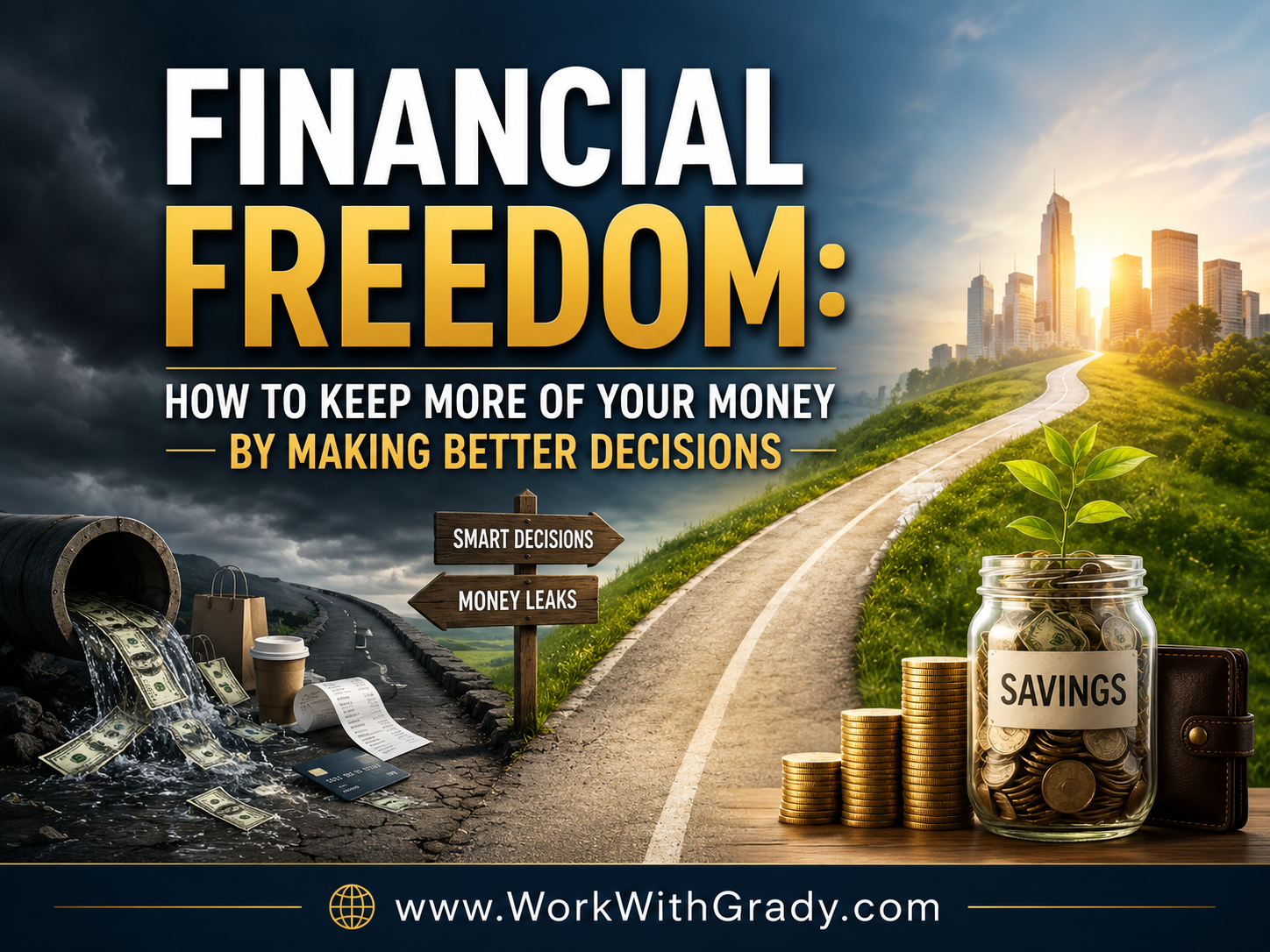
If you want real financial freedom, it’s not just about earning more. It’s about keeping more of what already comes in and building the discipline to stop small financial leaks from quietly stealing your future. The truth is, most people don’t lose money in one dramatic mistake. They lose it through tiny justifications that feel harmless in the moment, then compound into stress, pressure, and a life that always feels one surprise away from chaos.
In this article, you’re going to see where money slips out most often, why “more income” doesn’t fix the problem, and the simple shifts you can implement immediately to create more margin, stability, and options because that’s what real financial freedom actually feels like.
Most people don’t go broke from one bad decision. They go broke from a pattern of small ones that feel harmless in the moment.
It’s the “quick” $12–$28 lunch that turns into a default routine three or four times a week. It’s the subscriptions you signed up for during a free trial that now quietly draft your account every month. It’s the little impulse buys that don’t hurt today, but somehow keep you stuck in the same place next month too. And it’s the interest you pay for the privilege of staying behind: credit card interest, buy-now-pay-later payments, fees, and minimums that drain your cash flow before you even get a chance to build anything with it.
What makes these leaks so dangerous is they’re invisible to most people because they don’t feel “serious.” They don’t trigger the same alarm as a big bill or a major emergency. They’re small enough to justify, and frequent enough to compound. You can be responsible in a lot of areas and still lose the financial game because you’re bleeding in ten little places at once.
And here’s the part nobody says clearly: these leaks don’t just cost money, they cost momentum.
When money keeps slipping through your hands, you stay in low-grade pressure. That pressure changes how you think. You start making decisions based on relief instead of results. You choose “easy now” over “better later” because your nervous system is trying to survive the month. Then short-term decisions create more short-term consequences, and the cycle repeats: tight month → comfort spending → less margin → more stress → more short-term choices.
That loop is the opposite of financial freedom.
Financial freedom is built when you stop the leaks that keep you emotionally and financially pinned down because once you create margin, you can finally think long-term. You can invest. You can build. You can breathe. And that’s when your decisions start working for you instead of against you.
Here’s the most honest question you can ask yourself if you want financial freedom:
Are your daily spending habits building your future… or quietly sabotaging it?
Most people don’t answer that question intentionally. They answer it automatically. They spend based on how they feel in the moment, not on what they want their life to look like later. Stress spending is one of the biggest hidden problems in modern life, because it doesn’t look like irresponsibility. It looks like “I deserved it,” “I needed it,” “It was a long day,” or “It’s not that much.”
And that’s exactly how sabotage works. It doesn’t announce itself as self-destruction. It shows up as convenience. It shows up as small “rewards.” It shows up as coping. It shows up as emotional relief disguised as normal spending.
This isn’t about never enjoying life. That’s not the goal. The goal is to understand the difference between spending that drains you and spending that positions you.
Draining spending gives you a quick hit, then disappears. It doesn’t reduce future stress. It doesn’t create options. It doesn’t build stability. It buys a moment, but it often steals momentum.
Positioning spending does the opposite. It reduces future pressure. It increases flexibility. It builds a cushion. It creates options. It’s the kind of spending that makes your future self stronger instead of keeping your present self comfortable.
The people who create financial freedom aren’t joyless. They don’t eliminate fun. They eliminate unconscious spending. They stop letting mood run their money. They stop letting “small” decisions slide, because they understand those small decisions are the foundation of everything.
Financial freedom doesn’t start with earning more. It starts when your spending becomes deliberate, because deliberate spending is the first form of wealth-building behavior.
This is where people get uncomfortable, but it’s real:
A higher income will not fix poor habits. It usually magnifies them.
A lot of people believe, “If I just made more money, everything would finally feel easier.” And yes, more income can create relief. But relief only lasts if your habits and standards rise with the income. If they don’t, the extra money doesn’t create freedom. It creates a bigger version of the same mess.
That’s why you’ll see someone go from $4,000 a month to $10,000 a month and still feel broke. The problem wasn’t income. The problem was the pattern. When the pattern stays the same, lifestyle expands to match the paycheck. It starts innocently: a nicer car because “I earned it,” more eating out because “I’m busy,” upgrades because “why not,” subscriptions because “it’s only $19,” and bigger payments because the new income makes them feel manageable. Then suddenly the person has more money coming in, but they also have more money leaving, and the pressure returns, just at a higher level.
This is what people mean by lifestyle creep, but it’s deeper than “spending more.” It’s the psychology of justification. More income gives people permission to stop paying attention. They stop tracking because they “don’t need to.” They stop planning because they “make enough.” And the exact habits that kept them tight at a lower income quietly rebuild the same trap at a higher one.
Staying broke is often not just about what you earn. It’s about what you repeatedly justify.
Because whatever you justify becomes your normal. If you justify convenience spending, you’ll keep leaking money. If you justify impulsive upgrades, you’ll keep building payments. If you justify “I deserve this” as a daily habit, you’ll keep buying short-term comfort at the expense of long-term options.
But the same rule works in your favor.
If you justify discipline, you get options. If you justify tracking and awareness, you get control. If you justify building a buffer before you build a lifestyle, you get peace. Financial freedom isn’t created when the income rises, it’s created when your standards rise first, and your habits follow.
Comfort spending isn’t “bad.” It’s just expensive when it becomes a pattern—because patterns turn into lifestyles, and lifestyles turn into long-term outcomes.
Comfort spending is what you do for relief right now. It’s not always reckless. Most of the time it’s emotional. You eat out because you’re tired and cooking feels like one more thing. You shop because you’re stressed and buying something gives you a quick hit of control. You upgrade because you’re bored and novelty feels like progress. You “treat yourself” because you feel behind and you want a moment where life feels easier. None of that makes you a bad person. It makes you human.
The problem is that comfort spending is often a payment plan for emotions. You’re not paying for the meal, the item, or the upgrade, you’re paying for relief. And relief spending doesn’t just cost money. It trains your brain to solve discomfort with consumption. Over time, that becomes your default, and your finances start reflecting your emotional habits more than your income.
Wealth building is the opposite kind of relief. It’s relief later, but it’s real relief. It’s reducing debt so the monthly pressure drops and your paycheck stops feeling pre-spent. It’s creating margin so a flat tire or a medical bill doesn’t hijack your whole month. It’s investing in skills so your earning power rises instead of your lifestyle just getting more expensive. It’s building systems, side income streams, automation, assets, so money isn’t tied to your mood, your energy, or whether this week goes perfectly.
That’s why wealth building feels “boring” to most people at first. It doesn’t give the same instant emotional payoff. But it produces something comfort spending never can: options. And options are what financial freedom is made of.
Financial freedom is simply choosing the wealth-building category more often than the comfort category and doing it long enough that your future changes. Not by never enjoying life. Not by living like a robot. But by being intentional about when you consume for a moment… versus when you build for a lifetime.
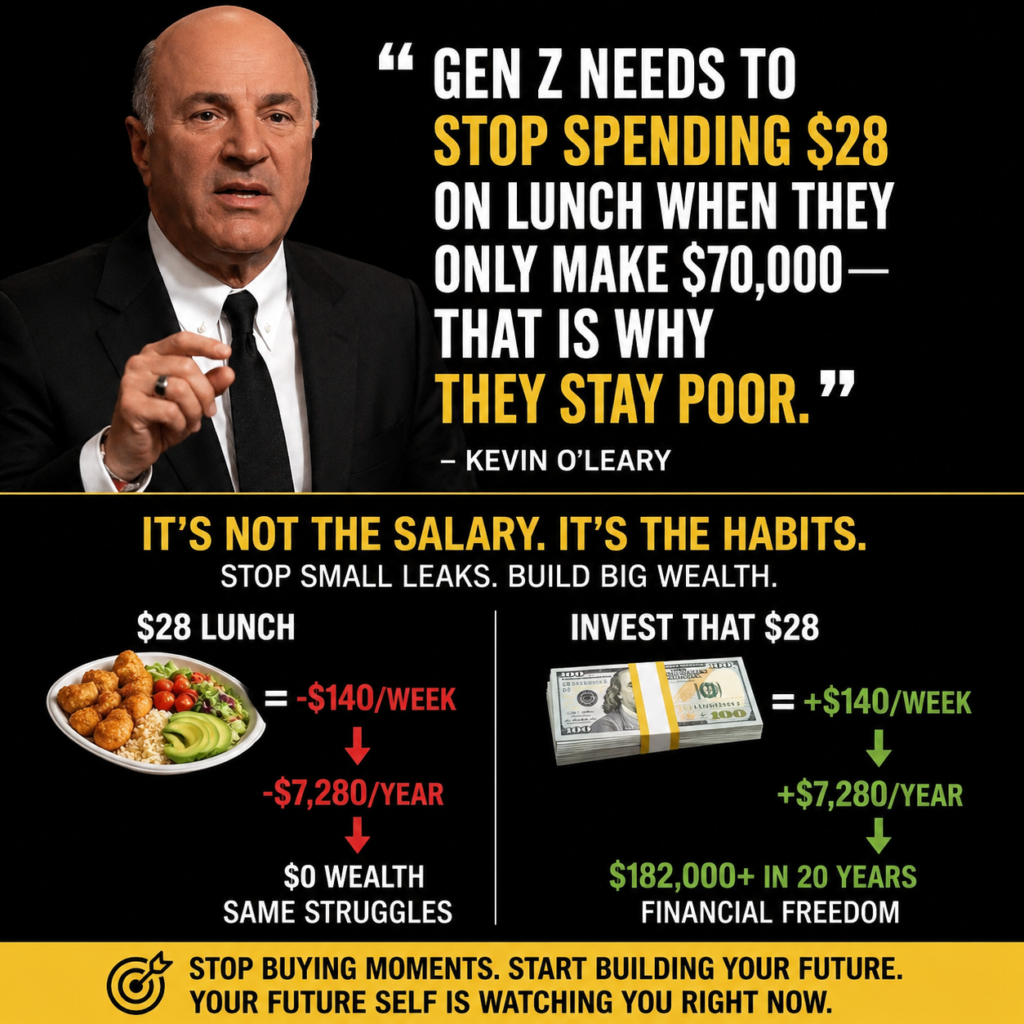
And here’s the truth: that $28 lunch isn’t “the issue.” One lunch doesn’t ruin anyone’s future. The issue is what happens when a convenience habit becomes automatic. A purchase you barely notice turns into a repeated pattern, and repeated patterns turn into thousands per year, money that could have reduced debt, built a buffer, created margin, or been redirected into something that grows. The reason it matters isn’t because you “shouldn’t buy lunch.” It matters because this is how financial freedom is either built or silently sabotaged: not through dramatic mistakes, but through unchallenged defaults.
So here’s the flip that creates financial freedom without turning your life into misery. Take one small leak and redirect it into something that builds you instead of drains you. If you’re spending $20–$30 a few times a week on convenience, don’t try to become perfect overnight. Pick one day this week to replace it. Bring lunch once. Make coffee at home once. Cancel one subscription you don’t use. Then, and this is the part that changes everything, move the exact amount you would’ve spent into a separate “Freedom Buffer” account the same day. Not because you’re punishing yourself, but because you’re proving to your nervous system that you can create margin on demand. That proof is what makes financial freedom feel real, because you’ll actually see your buffer growing and you’ll feel pressure leaving your body.
Now add one simple filter before you spend, and it gets even cleaner: Does this purchase create lasting value or temporary comfort? If it creates lasting value, no guilt needed. If it’s temporary comfort, no shame needed either, just awareness. Awareness is the beginning of control, and control is the beginning of financial freedom.
To lock this in, keep it simple and run it as a short “reset week.” For the next seven days, glance at your banking app once per night and just look at what went out. No judgment, no spreadsheets required, just awareness. At the same time, build your Freedom Buffer with a realistic weekly number you can hit, even if it’s $25. And finally, replace one convenience habit with a standard you can maintain, maybe cutting food delivery from four times a week to two, using a 48-hour rule on impulse buys, or canceling three subscriptions today. Small wins create identity. Identity creates consistency. And consistency is what creates financial freedom.
Financial freedom isn’t a lottery ticket. It isn’t a promotion. It isn’t one big “score” that changes everything overnight. It’s a pattern—built slowly, quietly, and consistently through the decisions most people treat as too small to matter.
It’s built when you stop bleeding money through repeated justifications and start making choices like a builder. It’s built when you stop spending to feel better in the moment and start positioning to live better long-term. It’s built when you create margin on purpose, reduce pressure on purpose, and develop the discipline to choose future peace over temporary comfort.
And the best part is this: once you start stacking these decisions, your entire life changes—not just your bank account. Your nervous system calms down. Your confidence grows. Your decision-making gets cleaner. You stop living like one surprise could knock you off balance, because you’re building stability instead of hoping for it.
If you want help turning this into a simple plan you can actually execute, I’m offering a FREE 20-minute private coaching session (normally $333).

We’ll identify your biggest financial “leak,” choose the one standard that will create the biggest shift, and map out a practical weekly rhythm that builds real momentum toward financial freedom, without perfection, guilt, or overwhelm.
#MoneyMindset, #FinancialFreedom, #WealthBuilding, #SuccessHabits, #EntrepreneurMindset, #Discipline, #PersonalFinance, #BuildWealth, #WorkWithGrady
Stay ahead in a rapidly world. Subscribe to Prysm Insights,our monthly look at the critical issues facing global business.

