

- Call us
813-751-6429

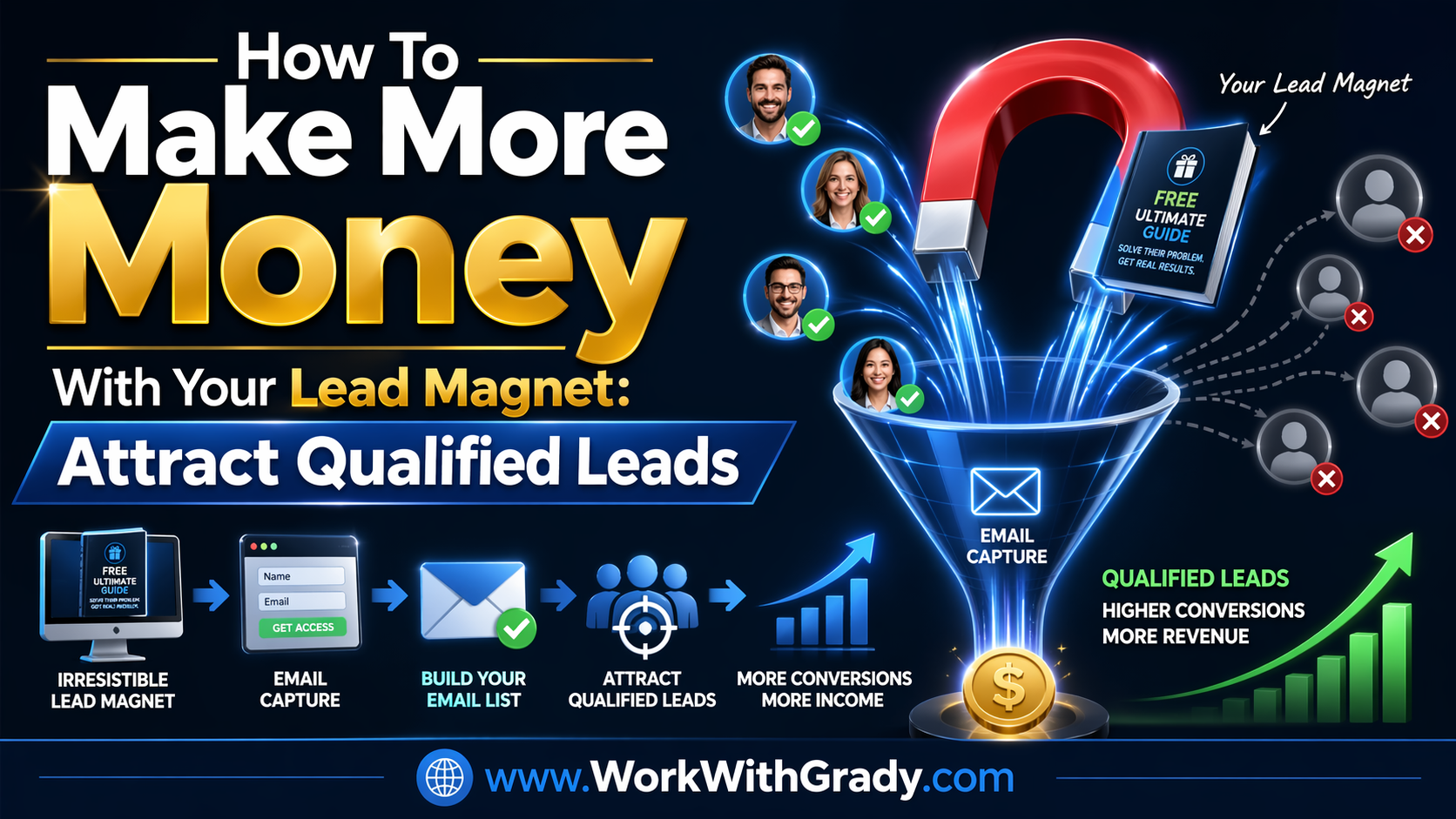
If your lead magnet is bringing you a list full of people who want “tips” but never buy, your problem isn’t traffic, it’s targeting. Most lead magnets are designed to get opt-ins, not qualified leads. They’re so broad that anyone can grab them, which means the wrong people do. In this article, I’m going to show you how to build a lead magnet that acts like a filter, attracts people with real intent, and turns your list into a buyer pipeline instead of a random collection of email addresses.
Here’s the truth: a lead magnet is not a gift. It’s a qualifier.
The internet trained business owners to chase volume. More subscribers. More clicks. More “growth.” So they create lead magnets like “10 Tips to Grow Your Business” or “Free Checklist for Success,” and sure, people opt in.
But those opt-ins rarely turn into sales because the lead magnet didn’t attract buyers. It attracted information collectors. People who like learning, like saving PDFs, and like the feeling of progress… without ever committing to change.
That’s the trap.
A bad lead magnet is designed to feel helpful to everyone. A great lead magnet is designed to feel urgent to a specific person with a specific problem right now. The right lead magnet doesn’t just give value, it creates clarity and makes the next step feel obvious.
A lead magnet has one job: to pull the right person into your world and reveal whether they’re a fit for what you sell. That’s why “general tips” don’t work. General tips don’t create urgency, and they don’t create a reason to keep paying attention.
If someone downloads your lead magnet and thinks, “That was nice,” you didn’t do your job.
If they download it and think, “This is exactly what I needed… what do I do next?” now you’ve got a qualified lead.
That’s the difference between a lead magnet that grows a list and an offer that grows revenue.
Most people build their offer like they’re trying to prove they’re smart. They teach everything they know. They dump strategies. They overload the reader.
But buyers don’t want information. Buyers want relief.
So instead of creating a lead magnet based on your industry, create it based on one painful bottleneck your best clients already feel.
For example:
If you’re a coach or service provider, your lead magnet shouldn’t be “How to Get More Clients.” That’s too broad. A stronger offer is something like “The 5 Follow-Up Messages That Turn New Leads Into Booked Calls.” That attracts someone who already has leads and already has a problem they want solved, conversion.
If you sell a high-ticket offer, a lead magnet like “My Morning Routine” might get opt-ins, but it won’t get buyers. A title like, “The 3 Questions to Ask Before You Spend $3,000 on Coaching” will. Why? Because it pulls in people already thinking about buying, people with intent.
If your business is based on lead generation, a lead magnet like “How to Grow Your Instagram” attracts hobbyists. A lead magnet like “The One CTA Shift That Instantly Filters Buyers” attracts decision-makers.
A lead magnet should feel like a doorway, not a library.
A lead magnet filters buyers when it does three things at once: it calls out a specific problem, it gives a quick win that proves you understand the problem, and it naturally points to the next step.
Here’s what that looks like in plain English.
It starts with the headline. The headline should describe the situation your ideal buyer is in, not your topic. “Lead Generation Tips” is a topic. “Getting Leads But They’re Not Buying?” is a situation. Situations attract buyers because buyers are living inside situations, not categories.
Then the content has to create movement. Not motivation, movement. The person should finish your lead magnet and feel like they can do something immediately that changes their result, even a little.
Finally, the lead magnet should set up the next step. If the lead magnet solves the “first domino,” the next step solves the full system. This is where most businesses miss money. They deliver a nice freebie and then disappear or start blasting random promos.
A good offer works when it creates a logical path.
Here are a few examples that consistently pull qualified leads, because they are built around intent.
“The Follow-Up Fix: 7-Day Email Sequence That Turns New Subscribers Into Replies.” This works because it targets people who already have leads and want conversion. That’s not a beginner. That’s a buyer.
“Stop Attracting Broke Leads: The 10-Word Hook That Filters Buyers.” This works because it targets a painful experience and promises a clean outcome: better leads.
“The 3-Stage Funnel Map: What to Send People After They Opt In.” This works because it targets a very specific problem that causes lost revenue: no follow-up structure.
Notice the pattern. None of these are general. They’re not “tips.” They’re not “motivation.” They’re tactical solutions to problems that cost money.
Most people treat their offer like the finish line. It’s not. It’s the beginning of the relationship.
If you want qualified leads, your follow-up should do what your lead magnet did: clarify the problem, teach the right path, and invite a next step.
When someone opts in, you should immediately reinforce what they just raised their hand for. Then you should deepen trust with simple value. Then you should present the next step clearly, without pressure.
Qualified leads don’t need hype. They need direction.
A lead magnet isn’t a “freebie.” It’s a filter.
If your offer is broad, generic, or designed to help “everyone,” it will absolutely grow your list, but it will grow it with the wrong people. You’ll get subscribers who want free information, quick tips, and something to save… but they won’t have urgency, they won’t take action, and they won’t buy. Then you’ll end up doing what most business owners do: blaming traffic, blaming the offer, or blaming yourself, when the real problem is that your lead magnet didn’t qualify anyone.
An offer that attracts qualified leads does the opposite. It’s built around one painful bottleneck your ideal buyer already feels, one clear outcome they want badly, and one natural next step that makes sense after they get the quick win. That’s how you stop collecting email addresses and start building a list of people with intent, people who are already looking for a solution and are simply trying to figure out who they trust.
Because the goal isn’t “more subscribers.”
The goal is better subscribers.
People who read your email and think, “Finally… someone gets it.”
People who don’t just consume, they move.
People who aren’t asking for more tips, they’re asking for a path.
And if you want help building a lead magnet that actually pulls buyers (not freebie hunters), I’m offering a FREE 20-minute private coaching session (normally $333).

In that session, we’ll identify the exact bottleneck your best clients are already experiencing, craft a lead magnet concept that filters for intent, and map out a simple follow-up plan that turns new subscribers into leads and sales, without you needing to post 24/7 or “hope” people buy.
Because the goal isn’t a bigger list.
It’s a better list.
#LeadMagnet, #QualifiedLeads, #LeadGeneration, #MarketingStrategy, #EmailMarketing, #SalesFunnel, #ConversionRate, #MessagingMatters, #ContentMarketing, #OnlineBusiness, #Entrepreneurship, #BusinessGrowth, #DigitalMarketing, #MarketingSystems, #ClientAttraction
Stay ahead in a rapidly world. Subscribe to Prysm Insights,our monthly look at the critical issues facing global business.

